KEY TAKEAWAYS
- Home remodeling changes what a space does. Renovation refreshes finishes; remodeling alters function, layout, or structure.
- Five categories cover most projects. Kitchens, bathrooms, decks, basements, and broader interior remodeling each have distinct timelines and budgets.
- Mid-Atlantic seasons shape the schedule. Decks belong in spring and summer. Kitchens and bathrooms belong in fall and winter.
- Cost ranges sit between $2,000 and $50,000+ per project. Scope, finishes, and structural work move the number up or down.
- The contractor matters more than the catalog. A family-owned remodeler with a single point of accountability protects homeowners from the most common failure mode in this industry.
So, what is home remodeling? In plain terms, it’s the work of changing what a home does, not just what it looks like. Replacing a faucet is a repair. Painting cabinets? That’s renovation. But tearing out the wall between the kitchen and the dining room so a family can finally cook and host in the same space, that’s remodeling. The difference matters more than most people think because it affects planning, cost, and how the whole project actually runs.
For homeowners across New Castle County in Delaware, Chester and Delaware Counties in Pennsylvania, and Cecil County in Maryland, hiring the right home remodeler is usually the difference between loving the result and starting the search again two years later. A&A Legacy Construction has built its reputation on that idea. Adam and Alexis Maule treat every project the way they’d treat their own home, because the company they built carries their family name.
If you’ve been wondering what home remodeling actually means, and what it really involves, this guide breaks it down in a way that’s easy to understand. Not the dictionary definition. What to expect, what it’ll cost, who to hire, and what could go wrong. It’s long. It’s specific to the mid-Atlantic. And it doesn’t dress up the parts of remodeling that homeowners deserve to know about before they sign anything.
What Home Remodeling Actually Means
Home remodeling is the process of changing the structure, layout, or function of a residential space. The shorthand definition matters less than the working one: if a project alters how a room works, it’s remodeling. If it only updates how the room looks, it’s a renovation. The two terms get used interchangeably in marketing copy. That’s fine for marketing copy. It’s not fine when a homeowner is trying to compare bids.
The practical difference shows up in three places: permits, timelines, and cost. Most renovations don’t require structural permits. Most remodels do. Renovations move quickly because there are no structural changes. Remodels take longer because walls move, plumbing reroutes, and electrical loads shift. Renovations cost less per square foot because the bones of the room stay intact. Remodels cost more because the bones change. Knowing which category a project falls into is the first piece of homework before any contractor walks through the door.
Remodeling also means something different from new construction. A remodel works inside an existing footprint, or sometimes a modest expansion. New construction starts from a foundation up. The two require overlapping skills, but the projects rarely belong to the same crew. A general contractor who builds custom homes from scratch isn’t necessarily the right pick for a kitchen remodel in a 1958 split-level outside Wilmington, DE. And the reverse is also true.
The category matters for scope. It also matters for the homeowner experience. A new build is a transaction with a builder. A remodel is a relationship, with a crew working inside the home where a family lives. That’s why so much of what makes a remodel succeed or fail comes down to communication, not craftsmanship. Both have to be there. Communication shows up first.
A&A Legacy Construction works exclusively in residential interior remodeling and custom deck building. The company doesn’t take on roofing, siding, windows, or gutters. That focus is deliberate. It lets Adam and Alexis specialize in the work where craftsmanship and family-life impact intersect: the kitchen where families gather, the bathroom that starts and ends every day, the deck where summer happens, the basement that turns into a teenager’s hangout or a home gym. Specialization is rare in the contractor world. Most companies will take any work that walks in the door. The honest answer to what home remodeling includes is who’s doing it, and how long they’ve been doing only that kind of work.
Remodeling vs. Renovation vs. New Construction
The terminology trips people up because the words sound similar, and the marketing keeps blurring them. Here’s how the industry actually uses these terms when it matters.
A renovation restores or refreshes an existing space without changing its function. New paint, new floors, new cabinets in the same configuration, new bathroom tile over the same shower footprint. The kitchen still goes where the kitchen was. The bathroom still has the toilet, sink, and shower in the same places. Renovations focus on finishes and fixtures. They’re typically faster and cost less than remodels.
A remodel changes the structure or layout of a space. A wall comes down to open the floor plan. A bathroom expands into a closet. A basement transforms from storage into a living area, complete with new framing, electrical, HVAC, and egress. Remodels almost always touch plumbing, electrical, or both. They take longer because permits, inspections, and structural decisions happen along the way.
New construction builds something that wasn’t there before. A whole new house. An addition that adds square footage to the existing footprint. A standalone garage. Decks fall into this category for permitting purposes in most mid-Atlantic jurisdictions, even though homeowners think of decks as outdoor projects rather than construction. Building a deck means pouring footings, framing the structure, and meeting code for railings and stairs. That’s construction work, and the inspector treats it that way.
There’s also a fourth category that gets confused with all three: home improvement. Home improvement is a broad umbrella that covers any work that adds value or function to the property. A new water heater is a home improvement. New cabinets are a home improvement. So is a kitchen remodel. So is a deck. Home improvement is the term that shows up on tax forms and HELOC applications. It’s not technically a project type. It’s a category for everything inside the larger family of work.
Why does this matter for a homeowner asking what home remodeling is? Because the bid for a renovation should not look like the bid for a remodel. If a contractor walks through a kitchen, talks about taking down a wall, and hands over a quote that looks like a paint-and-cabinet refresh, something is wrong. Either the scope was misunderstood, or the quote will grow significantly during the work. The clearest sign of a contractor who knows what they’re doing? One who explains, before any number gets written down, exactly which category the project belongs to and what that category implies for time, money, and disruption.
The Five Major Categories of Home Remodeling
Most residential remodeling work in Delaware, Pennsylvania, and Maryland falls into one of five categories. A&A Legacy Construction works in all five. Other companies work in some. The point of breaking them out isn’t to sell services. It’s to give homeowners a working vocabulary so they can talk to contractors as equals.
Kitchen Remodeling
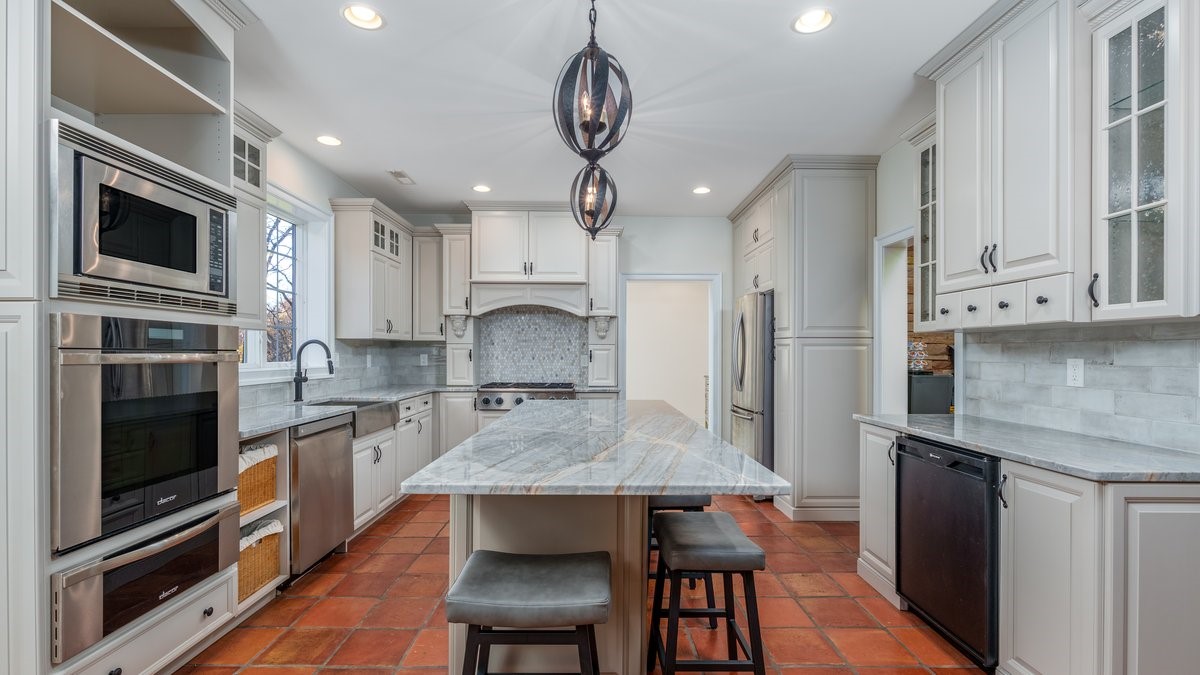
A kitchen remodeler does more than swap cabinets. A real kitchen remodel reconsiders how the room works: the work triangle (sink, stove, fridge), how many people use it at once, where storage goes, and how lighting changes the room across the day. Most kitchen remodels in this region range from a refresh-style project (new cabinets, counters, and appliances in the same footprint) to a full layout change with structural work and load-bearing walls. The middle option, which is the most common, involves keeping plumbing roughly where it is but updating cabinets, counters, lighting, flooring, and often the island.
“We see this a lot. Homeowners start thinking they just want new cabinets, but once we walk the space, it turns into improving how the whole kitchen functions.”
ADAM Maule, Co-Owner
Kitchen remodeling consistently ranks among the highest-ROI single-room renovations. According to the 2025 Cost vs. Value Report from Zonda and the Journal of Light Construction, a minor kitchen remodel recovers an average of 96% of its cost at resale nationally, while a full major kitchen remodel typically recovers 38-50%. The numbers are misleading on their own, though, because most homeowners aren’t selling. They’re remodeling because the kitchen they have isn’t working for the life they have. ROI matters when the move-out happens. Daily function matters every other day.
Bathroom Remodeling
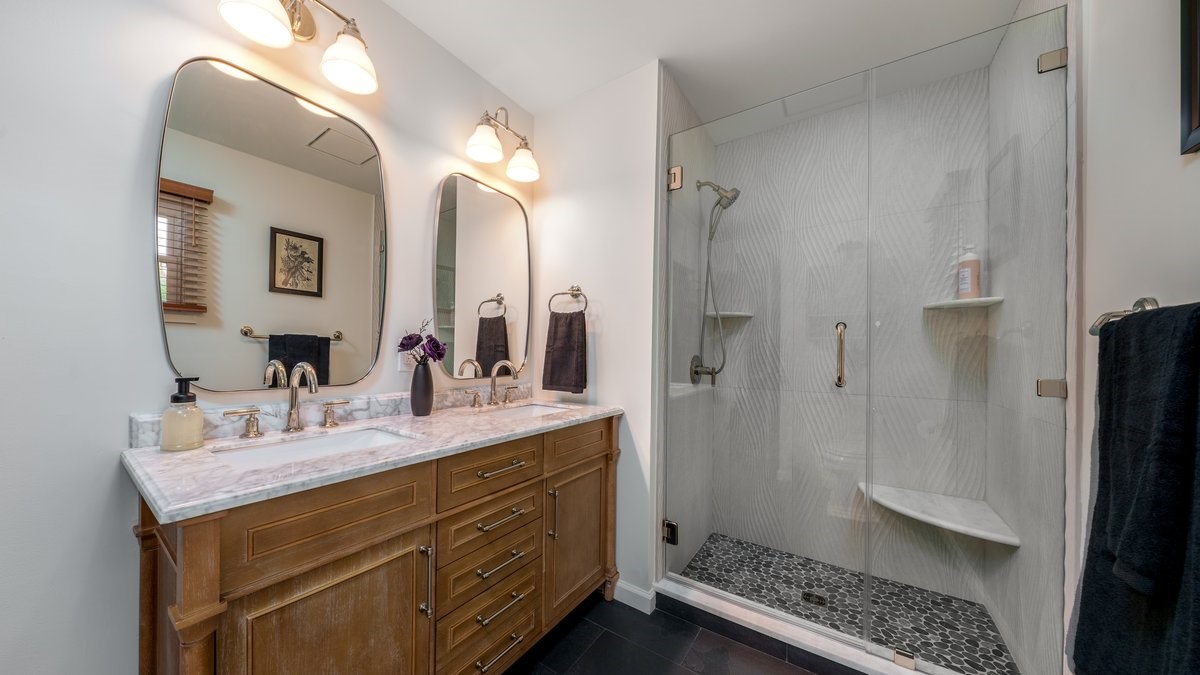
Bathroom remodels are split into three rough sizes: powder room, secondary bathroom, and primary or master bath. A bathroom remodeler has to think about water management before anything else. Most failures in bathroom projects come from cutting corners on waterproofing, not from cosmetic mistakes.
“This is one of the biggest areas where cutting corners causes problems later, and unfortunately we’ve seen what happens when it’s not done right.”
ADAM Maule, Co-Owner
A tile that looks great over a poorly prepared substrate will fail in three to five years. A vanity that bows because the floor wasn’t leveled? That’s a callback waiting to happen.
The other thing to know about bathroom remodels is the disruption factor. Losing a primary bathroom for two to four weeks is harder than most homeowners expect. Backup plans matter. A&A Legacy Construction walks through that conversation early because the family living in the home will feel the impact, whether or not the contractor mentions it.
Deck Building
Decks are construction projects that happen outside. A deck builder works with footings, framing, fastening systems, and railings that have to meet load requirements. Material choice matters more than most homeowners realize: pressure-treated lumber, cedar, hardwoods like ipe, and composite (PVC or wood-composite) all have different lifespans, maintenance needs, and price points in this climate.
The mid-Atlantic is hard on outdoor wood. Freeze-thaw cycles, summer humidity, and the spring transition crack and warp untreated boards faster than most homeowners expect. That’s why composite has taken over in this market. It costs more upfront. But it saves money over a 15-to-25-year window because it doesn’t need annual sanding, staining, or board replacement.
Spring and early summer are the natural seasons for deck work in DE, PA, and MD. Fall is possible but tighter. Winter installation is rare and usually only happens when a project gets delayed from the prior season. A&A Legacy Construction recommends starting deck conversations in late winter for spring builds, because the calendar fills fast. Deck demand is especially heavy in suburban Chester County and northern New Castle County, where backyards in Hockessin, DE, and surrounding neighborhoods often anchor outdoor entertaining for half the year.
Basement Finishing
Basement finishing turns an unfinished basement into a livable space. The work involves framing, insulation, drywall, flooring, lighting, HVAC adjustments, and almost always egress upgrades to meet code for habitable rooms. Basement finishing has one of the strongest cost-per-square-foot returns of any remodel because the homeowner is paying to add usable living area to a footprint they already own.
The trick with basements is moisture. A basement that gets even occasional water shouldn’t be finished until the water is fixed. Period. Finishing over a damp slab traps moisture against new framing and drywall, which leads to mold. The right move is a thorough moisture assessment first, drainage and waterproofing fixes if needed, and then finishing. Skipping the assessment is the most common reason basement remodels fail in this region. Older homes in Wilmington, DE, West Chester, PA, and Elkton, MD are particularly susceptible because of how the foundations were originally drained.
Interior Remodeling
Interior remodeling is the broad category that captures projects spanning multiple rooms or addressing the home’s overall flow. Open-concept conversions, primary suite expansions, mudroom additions, and whole-floor refreshes all fall under interior remodeling. These projects often start as a single-room idea and grow as the homeowner realizes the rooms next door need to change for the new room to work.
Interior remodels tend to be the longest projects because they touch the most. They also tend to be the projects where homeowners most underestimate the disruption. Living through a kitchen remodel for four weeks is hard. Living through a six-month interior remodel that touches the kitchen, the dining room, and the family room? That’s harder. Realistic expectations on the timeline are part of what a good remodeler delivers before the work starts.
How a Home Remodeling Project Actually Works
Most homeowners have never been through a remodel before. The ones who have are usually careful about the second one because they know where the first one went sideways. Here’s the realistic flow for a typical project, start to finish.
Step 1: Initial conversation. This usually starts with a phone call or a contact form. The homeowner describes the project. The remodeler asks questions about the space, the goals, and the budget. At this stage, we’re not throwing out numbers yet. It’s really about understanding your space and making sure we’re the right fit for what you’re looking to do. Mismatches at this stage save everyone time.
Step 2: In-home consultation. The remodeler walks the space. Takes measurements. Looks at what’s behind the walls, if anything is accessible. Asks about how the family uses the room. This is also where realistic budget conversations happen. A homeowner who walks in expecting a $15,000 kitchen and gets quoted $48,000 isn’t getting cheated. They’re getting an honest read on what the work involves. Conversely, a quote that’s significantly lower than other bids should raise questions.
Step 3: Design and proposal. This is where the project takes shape on paper. Cabinet layouts. Material selections. Finish choices. A detailed scope of work that lists everything included and (importantly) everything not included. Most disputes between homeowners and contractors come from gaps in the scope. A good proposal makes the scope so explicit that there’s no room for “I thought that was included.”
Step 4: Contract and permits. The contract should match the proposal exactly. Permits get pulled in the homeowner’s name (if required), with the contractor’s information attached. Schedule gets set. Deposits get handled per state regulations: Delaware, Pennsylvania, and Maryland each have rules on what percentage of the total can be collected upfront and when subsequent payments are due. In Pennsylvania, contractors performing more than $5,000 in home improvement work per year must register with the Office of Attorney General under the Home Improvement Consumer Protection Act, and homeowners can verify a registration number using the Pennsylvania HIC search tool before signing anything. In Maryland, the Maryland Home Improvement Commission requires licensing for any contractor performing home improvement work, and license lookups are public.
Step 5: Demolition and rough work. The first week or two of most projects is messy. Demo, framing changes, plumbing rough-in, electrical rough-in, and HVAC adjustments. This is when surprises tend to surface. Old houses in Newark, DE, Glen Mills, and North East have hidden quirks that no inspection can catch. A good contractor builds a contingency into the timeline and the budget for this kind of discovery.
Step 6: Inspections and finishes. Once rough work passes inspection, finishes go in. Drywall. Tile. Cabinets. Counters. Trim. Paint. This is the visible progress phase. It’s also where details matter most. A crooked cabinet run, a misaligned tile pattern, or a light switch in the wrong spot will bother the homeowner every day for the next twenty years.
Step 7: Final walkthrough and punch list. Before the homeowner releases the final payment, both parties walk through and document any items that need correcting. This is the punch list. It should be short on a well-run project. If the punch list is long, something went wrong during the work. The walkthrough is the time to surface it.
Step 8: Warranty and follow-up. A reputable remodeler stands behind the work. A&A Legacy Construction’s family-owned model means the same people who did the work are the ones answering the phone if anything needs attention later. That’s a meaningful difference from larger franchise operations, where the customer-service department is a different group from the build crew.
The whole process from first call to final walkthrough usually runs 8 to 16 weeks for a single-room remodel and 4 to 8 months for a multi-room or full interior project. Decks can run faster, often 3 to 6 weeks once permits are clear. Basements depend heavily on size and complexity, with 6 to 14 weeks being typical.
If something feels off in that first conversation, it usually doesn’t get better once the project starts. Most remodel relationships that fail don’t fail because of craftsmanship. They fail because of communication style mismatches that were visible on day one and ignored. If the initial consultation feels off, it’ll feel worse five weeks into the project.
What Home Remodeling Costs in Delaware, Pennsylvania, and Maryland
Cost is the question every homeowner has, and the one most contractor websites avoid answering. Here are honest ranges for the mid-Atlantic, based on the projects A&A Legacy Construction sees most often. Every project is different. Use these as starting points, not gospel. Costs also vary by state and county, so the linked state pages have more specifics for homeowners in Delaware, Pennsylvania, and Maryland.
Powder room remodel: $8,000 to $15,000. Usually a full fixture swap, new tile, new vanity, sometimes a moved fixture. Smaller scope, shorter timeline, typically 2 to 4 weeks of active work.
Secondary bathroom remodel: $15,000 to $30,000. New shower or tub-to-shower conversion, new vanity, new tile, often new flooring. Three to five weeks of active work.
Primary bathroom remodel: $25,000 to $60,000+. Full reconfiguration is common. Walk-in showers, freestanding tubs, double vanities, and heated floors push the upper end. Four to seven weeks of active work.
Refresh-style kitchen: $25,000 to $45,000. New cabinets, counters, appliances, lighting, and flooring in the existing footprint. No structural changes. Five to seven weeks of active work.
Mid-range kitchen remodel: $45,000 to $85,000. Same as above plus an island, partial layout changes, sometimes a cosmetic wall removal. Seven to ten weeks of active work.
Full kitchen remodel with structural work: $85,000 to $175,000+. Full layout changes, load-bearing wall removal, plumbing relocations, premium cabinets and counters. Ten to sixteen weeks of active work.
Composite deck: $30 to $70 per square foot installed. A 400-square-foot deck typically runs $12,000 to $28,000 depending on materials, railings, footings, and site complexity. Three to six weeks of active work.
Basement finishing: $40,000 to $90,000 for a typical 1,000-square-foot basement, depending on bathroom additions, egress requirements, and finish level. Six to fourteen weeks of active work.
Interior remodels (multi-room): $75,000 to $250,000+. Wide range because scope drives everything. Open-concept conversions, primary suite expansions, and whole-floor refreshes vary dramatically based on what gets touched. Four to eight months of active work.
Why Family-Owned Remodelers Build Better Homes
This is the section most “what is home remodeling” articles skip. It matters anyway.
The remodeling industry has a structural problem. Most companies are built around volume. The owner sells the work, project managers run the work, subcontractors do the work, and the customer-service department handles the warranty calls. Each layer is a place where information gets lost. And every layer has a different incentive: the owner wants more sales, the project manager wants to close out projects on time, the subs want to get paid and move to the next job, and the warranty team wants to reduce callbacks. Those incentives don’t all point to the homeowner.
“For us, it’s simple. The same people you meet at the estimate are the ones involved throughout your project.”
ADAM Maule, Co-Owner
Family-owned companies don’t have those layers. The person who quotes the project is the person who runs the project, and is the person who answers the warranty call. That single accountability changes everything about how decisions get made on-site. When something unexpected happens behind a wall on day eight, a family-owned remodeler can talk to the homeowner directly and decide together how to handle it. A volume operation has to escalate, get approval, get a change order signed, and lose two days of progress along the way.
The other thing family-owned operations bring? Reputation accountability. Adam and Alexis Maule live in the same region where they work. Their kids go to schools where their clients’ kids might also go. Their reputation in New Castle County, Chester County, Cecil County, and Delaware County travels through the same word-of-mouth networks that the next client comes from. A volume operation can shrug off a bad review if the next ten reviews are good. A family-owned business can’t, because the next client is probably a friend of the last one.
There’s also the legacy angle, and it’s not marketing. The company is named A&A Legacy Construction because the family running it sees the work that way. The kitchens, decks, bathrooms, and basements they build are spaces where other families will spend years of their lives. The tagline (“The Heart of Every Home”) came from that view of the work. It shows up in the finish details, the punch list discipline, and the willingness to do small things that don’t show up in any contract.
For homeowners weighing two contractors with similar prices and similar portfolios, the question that often matters most is structural: Who will actually be on the job? Who will pick up the phone if something goes wrong six months later? And whose name is on the door? Family-owned remodelers give clear answers to all three. That’s the same standard A&A Legacy Construction brings to every home remodeler consultation across the region.
How Seasons Affect Remodeling Plans in the Mid-Atlantic
Timing matters more in this region than it does in milder climates. Delaware, Pennsylvania, and Maryland get all four seasons in full strength, and remodeling work has natural rhythms that line up with the calendar.
Spring (March to May) is the strongest season for outdoor work. Decks, patios, and exterior projects (for contractors who do them) hit their peak demand here. Crews fill calendars fast. Homeowners who wait until April to start the deck conversation often end up with summer or fall installation dates. The smarter approach? Start the conversation in February for spring work.
Summer (June to August) continues outdoor projects and starts ramping up interior planning for fall. This is also when many homeowners are entertaining and using their kitchens hard, which is why kitchen remodel inquiries climb through the summer for fall start dates.
Fall (September to November) is the prime season for kitchen and bathroom remodels. The reason is practical: schools are back, schedules are predictable, and the family wants the kitchen functional before the holidays. A kitchen remodel that starts in September can finish before Thanksgiving if the project is well-planned.
Winter (December to February) is the off-peak season for most outdoor work, and the on-peak season for interior projects. Basement finishing, interior remodels, and bathroom remodels run heavy in winter. Crews have more capacity, lead times shorten, and some material costs even drop slightly.
A&A Legacy Construction recommends seasonal planning for any project that has flexibility in the start date. Decks belong in spring and early summer. Interior projects work year-round, but kitchens and bathrooms tend to align well with fall. Basements are always a good winter pick. Working with the calendar instead of against it means shorter lead times, more crew attention, and fewer weather-related delays.
The weather also affects active projects. Demolition and exterior work can pause for severe storms. Drywall and finish work need stable indoor humidity, which is harder to control in deep summer or deep winter without temporary climate control. A good contractor builds these realities into the schedule rather than ignoring them and hoping nothing slows the work down.
Frequently Asked Questions About Home Remodeling
Getting Started
What is home remodeling, in one sentence?
How long does a typical home remodeling project take?
Do I need permits for home remodeling work in Delaware, Pennsylvania, or Maryland?
Can I live in my home during a remodel?
Yes, for most projects, with planning. A kitchen remodel means setting up a temporary cooking area. A primary bathroom remodel means using a backup bath. Whole-floor remodels are harder to live through and sometimes warrant temporary relocation.
How do I know if my project is renovation or remodeling?
Cost and Budget
How much does home remodeling cost in DE, PA, and MD?
Should I always pick the lowest bid?
What’s the ROI on a kitchen remodel?
According to the 2025 Cost vs. Value Report from Zonda and the Journal of Light Construction, a minor kitchen remodel recovers an average of 96% of cost at resale nationally, while a major kitchen remodel typically recovers 38-50%. Mid-range bathroom remodels recover roughly 74%. Deck recovery varies by material, ranging from about 40% for composite to 50% for wood. Recovery percentages also vary by region and current market conditions. ROI matters at sale; daily function matters every day until then.
How do payments work on a remodeling project?
Are change orders normal during a remodel?
Process and Timeline
What does the remodeling process look like, start to finish?
When is the best time of year to start a remodel?
How disruptive is a remodel to daily life?
What happens if something goes wrong during the project?
How do I prepare my home for the start of a remodel?
Service Types and Scope
What’s the difference between a home remodeler and a general contractor?
Does A&A Legacy Construction handle exterior work like roofing or siding?
Can a kitchen remodeler also handle a bathroom or basement?
What’s the difference between basement finishing and basement remodeling?
How do I find a trustworthy home remodeling company near me?
Ready to Start Your Home Remodeling Project?
A&A Legacy Construction is a family-owned remodeling company serving New Castle County DE, Chester County PA, Delaware County PA, and Cecil County MD. Whether the question is a kitchen remodel, a custom deck, a bathroom renovation, basement finishing, or a full interior project, Adam and Alexis give straight answers without the upsell.
At the end of the day, this isn’t just construction to us. It’s helping families create spaces they actually enjoy living in. Schedule a free in-home consultation today and bring the project to people who’ll treat the work like it’s their own home.